allwellbrownconsulting.com

News

cracked economy
Economic Bulletins, Financial & Economic News, News

The Economists lied

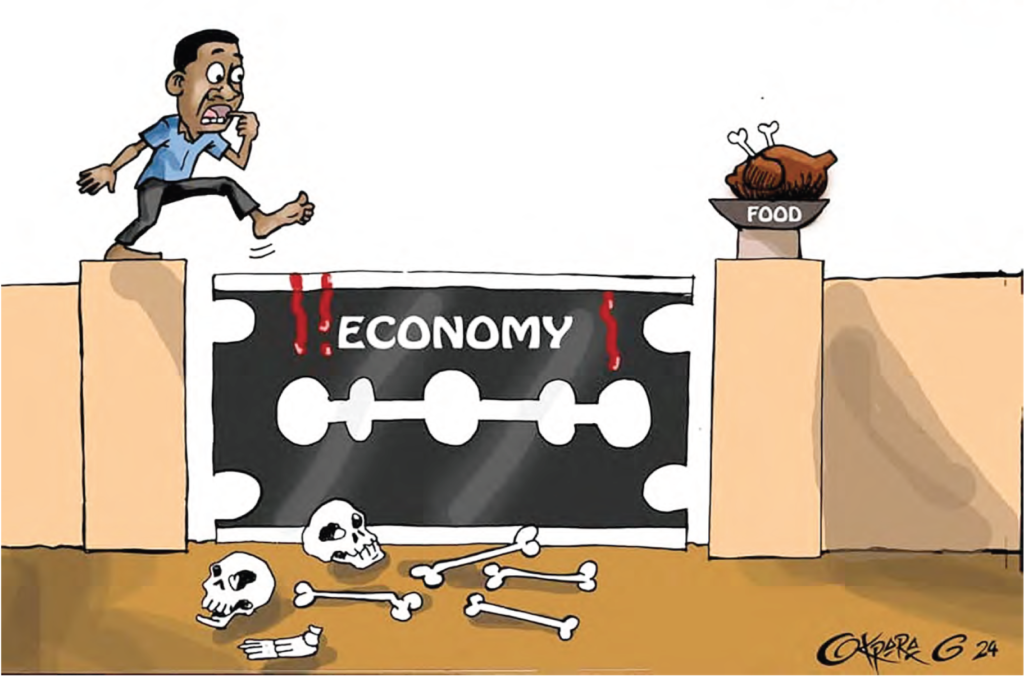
The Economists lied In concluding his seminal treatise on, “The General theory of Employment, Interest and Money,” John Marynard Keynes submitted that “—- the ideas of economists and political philosophers both when they are right and when they are wrong, are more powerful than is commonly understood. Indeed, the world is ruled by little less. Practical men, who believe themselves to be exempt from any intellectual influences are usually the slaves of some defunct economist. Madmen in authority who hear voices in the air, are distilling their frenzy from some academic scribbler of a few years back. I am sure that the power of vested interests is vastly exaggerated compared to with the gradual encroachment of ideas. Not indeed, immediately but after a certain interval, for in the field of economic and political philosophy, there are not many who are influenced by new theories after they are twenty-five and thirty years of age, so that the ideas which civil servants and politicians and even agitators apply to current events are not likely to be the newest. But soon or late, it is ideas not vested interests which are dangerous for good or evil” Before May 29th, 2023, there were heated formal and informal debates about the trouble with the Nigerian economy. Many economists and policy analysts attributed the problem to the huge funds paid out as fuel subsidies and the multiple exchange rates which allocated the scarce foreign exchange in a non transparent manner, in some cases, to non-economic operators. These two policies turned a few privileged individuals and politicians with no visible economic activities to billionaires overnight. They believed that only the rich benefited from the fuel subsidy. There was also the feeling that fuel was cheapest in Nigeria and that encouraged smuggling and black-market racketing in neighbouring countries which did not help the economy. The singsong was that the fuel subsidy drained the economy of the resources that would have been channeled to develop it and prosper the people. The belief was that the proceeds from the removal of fuel subsidy will be invested in infrastructure development, agriculture for food security, social welfare and human capital development such as healthcare, skill acquisitions, education as well as security of lives and properties. The air was ridden with calls for the removal of the fuel subsidy. In that frenzy, everybody became an economist, analyzing, pontificating and recommending how our economy will become an Eldorado for everybody if fuel subsidy is removed and multi-exchange rate is harmonized. Many of these economists believe that all subsidies are inherently bad and unless the subsidies are removed, Nigeria will not have a robust economy. The voice of the pseudo-economists drowned that of the real economists. In our country, once a profession or calling becomes fashionable and trendy, everybody wants to be so addressed. Economics is an influential profession that gives one the leverage to express an opinion on the direction of the economy and social life. People want to be addressed as Economists. Our journalists who are supposed to know better, do not help matters, as they address every public opinion analyst as an Economist. Finally, the call for the removal of the fuel subsidy was answered by President Bola Ahmed Tinubu on 29th May, 2023 when in his inaugural address, he declared that, “Fuel Subsidy is gone”. The President later confessed that the transformative statement, “subsidy is gone” was not part of the original text of his inaugural address which he was reading. On his instinct, he extemporaneously declared it in the middle of his speech and it became a policy of his government. The implication is that his transition committee and his economic think-tank committee may not have evaluated it as a priority takeoff policy to include in the inaugural address. Probably, they deferred it for later appraisal and implementation. Where then did the President get the confidence to announce such a far-reaching policy. It must have been from the clarion calls for it by Economists, public policy analysts, pseudo-economists, multilateral financial institutions, the work done by his transition team and the fact that the previous administration did not budget for the payment of subsidies beyond June, 2023. Even if the previous administration did not budget for fuel subsidies beyond June, 2023, the President on inauguration could have presented a supplementary budget for fuel subsidies. Before, May 29, 2023, fuel sold at N165 per litre. On the announcement of fuel subsidy removal and its implementation by NNPC, the fuel price shot up to N589 per litre. In November, 2025, fuel sold at N930. When the epic fury war between the United States and Israel on one side and Iran on the other side started on February, 28th 2026, the fuel price jumped to N1,300 per litre. On the Exchange rate harmonization policy, the Federal Government through the Central Bank of Nigeria merged the multiple exchange rates to align with the parallel market. This was done on June 14th, 2023. By June, 13th, 2023, the official rate was N471/$ and the parallel rate was N765/$ which gave a difference of N287/$. On the merger of the rates on June, 14th,2023, a devaluation of 31%occurred and the official rate moved to N620/$ and the parallel market was N765/$. By 15th June, 2023, the official rate graduated to N657/$ and the parallel inched to N791/$. Sometime in 2024, the rate went haywire as low as N1,900/$ until the CBN intervened by restructuring the foreign exchange market with forex reforms, cancelled the license of many bureau de change, commenced funding the market using the BDCs in the market. It is true that money has been saved by the removal of the fuel subsidy. The removal has boosted government finances. On the other hand, it has greatly impoverished Nigerians. The Federation Accounts Allocation Committee (FAAC) has shared more revenues to the States and Local Government Areas. In 2023, the FAAC allocation to States was N3.58trillion. This rose to N5.81Trilion in 2024 which amounted to 61.6% increase

Economic Bulletins, Events, News, Uncategorized

Dangote Daughters and succession plans in the Dangote Group

Dangote Daughters and succession plans in the Dangote Group On the 16th February, 2026, the Dangote Industries Group announced major appointments to drive its vision 2030 which is to become a $100Billion enterprise. The appointments elevated the roles of the three daughters of Alhaji Aliko Dangote, the President of Dangote Group and the richest man in Africa. In the appointments, the eldest daughter, Mariya is to assume the position of Group Executive Director, Commercial Operations, Cement and Food Business. The second daughter, Halima was appointed as Group Executive Director, Dangote Family Office and International offices (Dubai & London). Fatima Dangote was appointed Group Executive Director, Commercial Operations, Oil & Gas. This includes the operations of the $20Billion Dangote Petroleum Refinery and Petrochemicals, Fertilizers and the West African Exploration and Production Company Ltd (WAEP) Upstream. To many Nigerians, Dangote businesses are for himself and his family. In reality, this is far from the truth. Dangote businesses are now our business. Our National business. Our National brand. A Nigerian Multinational conglomerate. A landmark institution. Our National pride and joy. Our comfort, sustenance, lifestyles and livelihood depend on Dangote businesses. Dangote produces sugar that sweetens our food, salt which enhances the flavor and preserves our food, flour for our baking and cooking, cement for our shelter and infrastructure, fertilizer for boosting our food production, petrochemicals for the industries, the refinery for petrol, diesel and aviation fuel for transportation, logistics and running the industries. There is hardly any Nigerian family that does not use one Dangote product or the other. In our history as Nigerians, there is no record of a Nigerian businessman who has invested in varied sectors that impact on our lives as much as Dangote has. In addition, Dangote is a major employer of labour which feeds and sustains many families economically. For many investors in the Nigeria Exchange, investments in Dangote companies such as Dangote Sugar, Dangote Flour, Dangote Cement have become a life-changing experience. Dangote companies have from the inception of their listing on the Exchange paid mouth-watering dividends thereby rewarding investors handsomely. For a conglomerate that impacts and touches our lives in many ways, a major concern for its stakeholders is its sustainability and future prospects, more so, when its founder, Aliko Dangote is approaching old age at 68. The decision to elevate the daughters of Dangote to executive positions is a laudable one and will go a long way to allay the concerns and fears of stakeholders on issues of sustainability of the business empire. For the Dangote daughters, the assignment to take up the mantle of leadership is a wake-up call for conscientious stewardship knowing that you will carry the weight of the economic wellbeing and expectations of Nigerians and other nationals on your shoulders. You can no longer live in the shoulders of your legendary father but it is time to prove your mettle. The greatest advantage is that the Founder is still very active and agile to groom the next generation of the Dangotes to sustain, drive and leapfrog the businesses to the next level in the best traditions, principles, cultures, values and social capital of the superbly talented and innovative President Aliko Dangote. One of the major drawbacks of our indigenous businesses in Nigeria is lack of sustainability after the demise of the founders. By the appointments, Dangote has taken a cultural dynamic decision. In our culture, women are made to play second fiddles especially on issues of succession and inheritance. On the issue of succession, it is only men that are reckoned with. On this decision, Dangote has taken a cultural somersault and broken that jinx. Women are now leading lights in corporate ladder breaking glass ceilings. Dangote has just laid the foundation for the sustainability of big businesses in Nigeria. Other business entrepreneurs like Abdulsamad Rabiu, Tony Elumelu, Chief Mike Adenuga, Jim Ovia, Femi Otedola and Innocent Chukwuma should follow his foot -steps. Many Nigerian entrepreneurs that founded flourishing and scalable businesses could not consciously institute succession and sustainability plans. As a result, many of these businesses floundered and died. Where are the forerunners like Ojukwu Transport Company Ltd, Odutola Industries Ltd, Dantata Industries, Isyaku Rabiu Industries. Most Nigerian businesses are still at the first- generation stage. In the global business scene, family-controlled businesses and hereditary principles are gaining grounds. Family businesses make up about 20% of Fortune Global 500. Such global brands like Walmart, Samsung, BMW, Volkswagen, LVMH, Glencore, Lukoil, Mukesson are all family controlled. Nigerians have continued to view big business and wealth creation as a means of enjoyment and maintaining lifestyles. As a result, most family businesses are squandered as soon as the founders and proprietors die. Wealth creation and its sustainability is the foundation of a nation’s prosperity. Wealth creation is an art which sustains humanity. Nations are built on the foundation of enterprise and not just on politics. It is not just the preservation of the family business but preservation and stewardship to humanity. It is not every family that have the gift and skill of creating and sustaining big wealth through big businesses. Those that have that skill, business in their blood or the “Lucky Sperm Club” as Warren Buffet calls them should sustain it for it is a service to sustain the economic survival and sustainability of humanity. Dr Allwell Umunnaehila is a Chartered Stockbroker, a Financial, Economic and Management Consultant who holds a Ph.D in Business Administration from Babcock University,Nigeria. He is the CEO, AllwellBrown Consulting Ltd, an author, a seasoned scholar and Investment trainer. He is also a Fellow of Chartered Institute of Stockbrokers (CIS), Member, Chartered Institute of Securities and Investment (CISI), Member, Capital Market Academics (CMA) and a licensed Securities Dealer with Securities and Exchange Commission, Nigeria. He can be reached on aumunnaehila@allwellbrownconsulting.com.

Trump Image
Economic Bulletins, Financial & Economic News, News

The United States, Tariffs, AGOA and the Global Economy

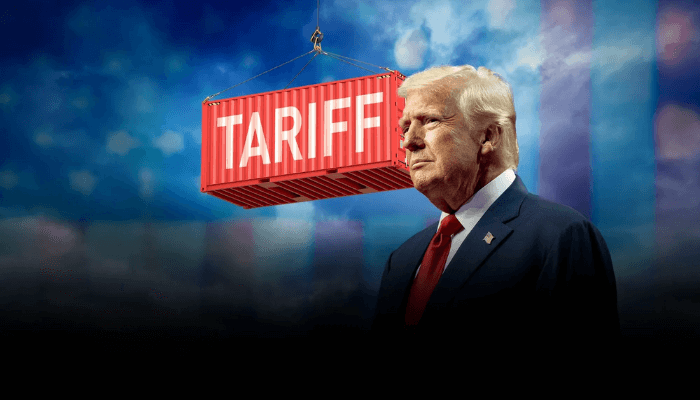
The United States, Tariffs, AGOA and the Global Economy On the day, tagged “Liberation day” in US on 2nd April, 2025, President Trump announced expansive global tariffs called reciprocal tariffs which shook the world. The highlight of this policy is a universal baseline of 10% for all other countries. About 64 countries that are perceived to have ripped off America by higher tariffs were charged reciprocal tariffs. Such countries like China got 34%, European Union got 20%, Japan 24%, Vietnam 46%. All cars imported into US would attract 25% tariff. Steel and Aluminium attract 25% tariffs. Canada and Mexico had earlier been slammed with 25% tariffs on imported goods from them. Since the liberation day, other developments have followed. The trade tariffs imposed on China has been increased from 34% to 104% to 125% and 145% and now 100%. China on its part retaliated by imposing 84% on American goods and subsequently increased it to 125%.  The much-feared trade war ensured between the two biggest economies in the world. The global trade scene was heated and uncertainty reigned. The US and China went into trade deal negotiation. An agreement was reached to scale the tariffs to 30% for 90days. Just as the situation was abating, on 9th October, 2025, China imposed a restriction on the export of rare earth metals. It also banned its nationals and Chinese companies from assisting in the processing of rare earth metals overseas. This pronouncement revived the tensions and aggravated the trade war. China controls about 70% of rare earth metals in the world. China also controls about 90% of the global refining, processing, separation of rare earth metals and magnet manufacturing. In retaliation, President Trump imposed a 100% tariff on imports from China. The US imports about 70% of its rare earth metal inputs from China. At the centre of the tensions are also the export of semi-conductor chips from US, lack of patronage of US soyabeans and agricultural goods by China and the restriction of rare earth metals by China. The two great economic powers have entered into another round of trade negotiation. The objectives of imposition of the tariffs are to generate revenue in order to reduce trade deficits, protect local industries from unfair competition, serve as bargaining chips for trade negotiations, correct perceived unfair trade practices and enhance government revenue. It is expected that this policy will re-orientate the trade policy of US and ensure that companies relocate their manufacturing into US to create more jobs and enhance revenue. This policy has reset the Free world order and global trade policy as enunciated in World Trade Organization’s policies. The policy has the great potential of deepening global trade war and eroding trade norms. Tariffs are instruments of trade. America has about $773.4Billion trade deficits. This is because other countries charge higher tariffs on American goods than America does on theirs. It is important to note that many manufacturing companies relocated to Asia, Europe and South America due to high cost of labour and stringent regulations and anti-trust requirements in US. Asian countries such as China, Japan, South Korea, Taiwan, Hong Kong, Singapore became the manufacturing hub of the world. America with its population of citizens with high per capita income and high disposable income powered by credible credit system remains the biggest market and consumption destination of Asian goods. China is the biggest beneficiary of America’s liberal tariff policy. To take full advantage of America’s liberal trade policy, China re-routed its manufacturing and exports to the US through its ASEAN neighbours such as Cambodia, Laos, Vietnam, Myanmar, Thailand, Indonesia. This is the reason for the high reciprocal tariffs on these countries. China exports through Lesotho, Egypt, and Ethiopia in order to take advantage of AGOA, it exports through Mexico to take advantage of NAFTA, it exports through Bangladesh and the ASEAN in order to conceal its trade deficit with US to avoid its backlash. Judging from the experience and fallout of the Tariffs Act of 1930 popularly known as Smoot-Hawley Tariffs Act of 1930 which is said to have greatly deepened the great depression of 1929 and prevented the anticipated quick economic recovery, tariffs are a gamble. This tariffs act was enacted and signed into law by President Herbert Hoover on June 17, 1930. That act raised tariffs on over 20,000 imported goods in America. The act was enacted to protect American industries from foreign competition during the ravage of the great depression which started in October 1929. Many American policy analysts and economists advised against the bill but the congress went ahead to pass it.  Rather than increasing manufacturing and domestic employment, it worsened and deepened the depression when US’s trading partners retaliated by imposing counter tariff which made US exports and global trades to reduce. This was a caution against protectionist policy. They can be useful in the short-run but in the long-run, they work against the imposer. The Economist Magazine described the Smoot-Hawley Act of 1930 as ‘’the tragic-comic finale to one of the amazing chapters in world transaction history’’. This policy was subsequently followed by more liberal trade policy like the Reciprocal Trade Agreements Act, 1934.On 25th April, 1987, President Ronald Reagan in his speech expatiated on the short-term merits and long- term grave demerits of high tariffs and protectionist economy. Many of the traditional allies of US are hurt with the tariffs. With the new tariff regime and the expiration of the Africa Growth Opportunities Act (AGOA) on 30th September, 2025, the African countries are doubly wiped in their trade relations with the US. AGOA was signed into law by President Bill Clinton on 1st May, 2000 as part of Trade and Development Act 2000. AGOA has been renewed severally in 2004, 2008 and 2015 with each renewal extending its duration and scope. The Act was enacted to grant eligible African countries duty-free access to US market for over 6000 products including agricultural goods, textile and manufactured items. Although African countries did not take full

Economic Bulletins, Financial & Economic News, News

The United States and the new World Order

The United States and the new World Order Published on Business Day Newspaper – October 5, 2025 After the second world war, the world was devastated. Europe was in ruins. Germany, the aggressor, was disintegrated. The Soviet Union was in disrepair. Japan was in rubbles. But the United States was unscathed. The US was the only country whose production capacity and economic power was not adversely affected by the war. However, the Americans and their leaders learnt a lesson that you cannot live in peace when your neigbhours or allies are in crisis or war. It is a matter of time before the crisis will affect you either by refugees from your neighbours besieging your territory or the aggressor encroaching into your country. It can also affect you by reduced trades and economic relations with your war-ridden neighbours. The World War 11 ravaged the world with destruction and inflicted global poverty, hunger and despair on it. The world gasped for peace, reconstruction, rehabilitation, redirection, purpose, dignity and restoration. There was a leadership vacuum. This was the period of the global outcry of, too little, too late. The great Franklin D. Roosevelt, the 32nd President of America and later his successor, Harry Truman, the 33rd President of America led America to rescue the World. First was the founding of the World Bank and IMF commonly referred to as the Bretton Woods Institutions in 1944 to help rebuild Europe and Japan. Later, American discovered that what Europe required to be rebuilt was not loans but grants hence the Marshall Plan. Gradually the World Bank shifted its focus to restore financial stability and reduce poverty in the world. At the Monetary and Financial conference in Bretton, a new economic order was set up with an agreement that there will be a fixed relationship between currencies. It was decided that the American dollar (the greenback) would be the world’s reserve currency since US was undisputably the world’s most economic power holding two-thirds of the world’s gold reserve. This was followed by the founding of the United Nations in 1945 for global peace and harmony. The Food and Agriculture Organization, an arm of United Nations was founded in 1945 for global food security. The Marshall Plan was implemented in 1947 to restore the economies of Western Europe. It cost the US the sum of $13.1 Billion to implement. It remains undeniably the most benevolent gesture, sacrifice and grant that restored 13 countries of western Europe to economic prosperity and political prominence. The World Health Organization was founded in 1948 to expand universal health coverage. NATO, an alliance of countries of Europe and North America for co-operation in defence and security was founded in 1949.NATO remains the most successful defence alliance in the last 76years. Other global institutions founded by the leadership and most times with the initiatives of US included International Court of Justice, UNESCO, UNICEF, WTO, G7 group of nations, G20 group of nations. USAID is the large heart and giving/philanthropy arm of America. America also initiated the global consensus on global human rights, peace, international law, justice and norms. These institutions helped to maintain relative global peace, stability, reduce inequality and poverty as well as engender economic prosperity in the world. Indeed, there has not been any war of global dimension since 1945.The propensity of territorial acquisition and encroachment was eliminated. Territorial aggression vanished until the Ukraine-Russia war which started in 2022.Yes, there has been wars like Israeli -Arab war, Vietnam war, Israeli-Palestinian war, Iraqi war, Libyan war, Syrian war, Congo DRC, Sudanese War but none has been of global dimension or territorial expansion like the World 11. America organized and held the world together around a series of noble ideas and global multilateral institutions that catered for the needs of the world. When the cold war which started in 1947 ended with the disintegration of the Soviet Union in 1991, America became the sole global superpower. With her triumph in the cold war, America’s brand of capitalism and democracy became the thrust of global economic and political system. Liberalization, free market economy, privatisation, globalization and competition became the recommended anchors of economic policies. The former Communist world emulated and adopted the capitalism principles in their economic management. By 1978, Deng Xiaoping led China to open their economy to the world. They established socialist market economy, developed capital market and promoted stock exchanges. They privatized most of the small and medium sized public enterprises as well as lifted price control. China promoted private investment and accepted foreign direct investment. This was the beginning of China’s industrial revolution and it has become the world’s manufacturing hub today. On its part, Russia after the collapse of the Soviet Union in 1991, under the leadership of President Boris Yetsin opened the Russian economy to the world through a series of post -Soviet reform policies which included price liberalization, currency stabilization, tax reforms, energy sector reforms and economic diversification. Other Asian countries like Japan, India, Singapore, Hong Kong, Taiwan, South Korea, Malaysia, Turkey adopted the free market economy. In fact, these countries became the economic miracles of the 20th Century through the adoption of free market economy. The Washington Consensus became the template of economic development reform framework for the developing nations. The American Dollar (the greenback) became the currency of the world. The world became America’s market. Currency drives trade, trade drives wealth and economic prosperity. American and its Western allies prospered beyond their forecast. As at 1945, the average per capita income in the US was $12,100; by 2024, it was $82,769. It was at the height of this level of economic prosperity in 1999 that President Clinton in his state of the Union address, declared that “the promise of our future is limitless”. America influenced the world in diverse ways. It became the policeman of the world with the highest military and technological and economic might. However, America also incurred the wrath of many of her admirers by the use of its might

Economic Bulletins, Financial & Economic News, News

Repositioning the Nigeria’s commodities ecosystem with Investments and Securities Act, 2025

Repositioning the Nigeria’s commodities ecosystem with Investments and Securities Act, 2025 Published on Business Day Newspaper – September 28, 2025 Nigeria is a commodities-driven economy. Since the scrapping of the Commodities Boards in 1986 in line with the deregulation of the economy, the Nigerian Agricultural Commodities market was left in the hands of local producers and private operators. The major processors like the Fast-Moving Consumer Goods Companies (FMCGC) like Nestle, Cadbury, Flour Mills, Nigerian Breweries, Olam, Guinness, etc, had to develop their own raw material supply chains by developing their own farms, partnering with some selected farmers to produce for them or work with local aggregators to supply them their needed commodities. This is how private markets like Dawanau grains market in Kano, Birnin-Gwari Grain Market in Kaduna and others developed. In 2015, Securities and Exchange Commission (SEC), Nigeria, launched the Capital Market Masterplan 2015-2025. In that policy document, SEC planned to develop a thriving Commodities trading ecosystem where commodities, standardiSed commodities contracts and futures contract would be traded on licensed commodities exchanges with the concomitant advantages of price discovery, risk management, quality standards, access to capital, assured delivery etc. The above initiative led to the licensing of Commodities Exchanges and the trading of commodities and commodities contracts on formal commodities Exchange. The robust positioning and development of the Commodities Ecosystem as envisaged by the Capital Masterplan was not fully achieved because the then prevailing capital market legislation, Investments and Securities Act, 2007 had limited provisions for a commodities market. In March,2025, Investments and Securities Act, 2025 (ISA, 2025) was enacted which repealed Investments and Securities Act, 2007. ISA, 2025 has 358 sections which are divided into 18 Parts. This new law has completely redefined, repositioned the Nigerian Commodities ecosystem in several ways. Section 357 expanded the definition of Securities beyond shares and bonds to include commodities, futures, contracts, options, and other derivatives or any other instrument deemed as securities which may be transferred by means of any electronic mode etc. Section 224 -239 provided the framework for the commodities exchanges with other ancillary provisions like registration of commodities exchanges with SEC, power to SEC to prescribe minimum share capital for the Commodities exchanges, requirements for the incorporation of commodities exchanges with CAC, the power of commodities exchanges for self-regulation etc. The definition of Commodities was made in its broadest terms in Section 357 to include precious metals, electricity, crude oil and gas, agricultural produce, livestock, currency, solid minerals, digital assets, by-products of commodities, processed commodities products and such other commodities as are customarily traded on the exchange. This definition has deepened the commodities market and enlarged the varieties of commodities that can be traded on an Exchange. Before now, the definition of commodities was restricted to agricultural commodities. On the other hand, a warehouse is described in Section 357 as any commercial space, building, silo, cold chain, tank farm or compressed tank, vessel, vault, structure or other protected enclosure approved by the Commission to be used or useable for the storage or conditioning of commodities or buildings used for storage purposes. One of the challenges that has hindered the development of commodities trading and the Nigerian commodities ecosystem is limited access to capital. The banks, other financial institutions and major investors complain of the absence of a law backing the issuance of warehouse receipts which will act as tradeable and transferable collateral in the funding of commodities transactions. One of the major turning points of the provisions of ISA, 2025 is the recognition of warehouse receipts as tradeable and investment assets. Section 240-267 provides for the operations of warehouses, warehouse owners, collateral management and the issuance of warehouse receipts as tradeable assets. From the foregoing, ISA, 2025 has made robust provisions to reposition the commodities market. It has defined the depth and breadth of the market, the products, market participants, trade instruments, assets and charted prospective market dynamics. With its provisions, it can now be said that apart from the equities, fixed income, OTC, and the new digital markets, the commodities market is the new frontier and investment destination in the Nigerian capital market. However, a law is as effective and impactful as the operators are able to implement it. The coast is now clear and their job is now cut out for the regulator, SEC, the operators and other stakeholders of the commodities ecosystem to take advantage and harness the expansive provisions of ISA, 2025 to create wealth and deepen the commodities ecosystem. SEC has done very well, its management team and staff deserve our commendation for envisioning, coordinating, driving and achieving the promulgation of ISA, 2025. The major five major Commodities Exchanges in Nigeria, namely, Nigerian Commodities Exchange, Afex Commodities Exchange, Lagos Commodities and Futures Exchange (LCFE), Gezawa Exchange and Prime Commodities Exchange have operated for some years. The new ISA, 2025 has enlarged the horizon and the scope of their market. There are many opportunities to explore. Our Agricultural commodities such as Maize, Oil palm, Cocoa, Sorghum, Ginger, Cassava, Rice and fruits are in high demands in the local and international markets. Every community in Nigeria is producing one exportable agricultural commodity or the other. Trading them on the exchanges will raise their demand and create incentives for farmers to produce more. Price volatility will be ameliorated. One of the challenges facing the commodities exchanges is the issue of generating sufficient volumes of commodities to satisfy the demand. Our farmers are usually smallholders. However, involving Aggregators can solve this challenge. Gold is currently being traded on LCFE. Trading Gold and other solid minerals such as Lithium are greenfield waiting to be catalyzed and explored. Three minerals that are shaping the 21st Century like Lithium found in large quantities in Nassarawa and Ekiti states, Noibbium in Kogi, Cobalt in Zamfara and Kaduna can be traded on the Exchanges. Crude oil, refined petroleum like PMS and gas can be traded on the Exchanges as they are being traded in Switzerland, London. Cows, Goats, Sheep, pigs can be

Financial & Economic News, News

The World Bank is not the cause of Nigeria’s economic failures

The World Bank is not the cause of Nigeria’s economic failures Published on Business Day Newspaper – September 22, 2025 Many of Nigeria’s policy and economic analysts have always blamed the World Bank/IMF for Nigeria’s economic failures. Many of them point to the 1986 Structural Adjustment Programme, which prescribed the austerity measures. Others point to President Tinubu’s present economic reforms. They say that the World Bank supported the removal of the petroleum subsidy and the harmonisation of the multiple foreign exchange regimes. During the Annual World Bank/IMF in October 2024, Mr Abebe Selassie, the IMF’s Africa Region Director, denied that IMF/World Bank played any role in the removal of fuel subsidies and the harmonisation of the foreign regime by the Federal Government of Nigeria. On 26th October, 2024, the Nigerian Labour Congress issued a statement in response to Mr. Abebe Selassie’s denial. In that statement, they stated among other things that “It is pretentious and truly too late to begin to deny complicity because we warned the government about the consequences of implementing IMF and World Bank-driven policies….. Once again, we call on the World Bank and IMF to remove their knees from our necks so that we can breathe as a nation. They have become the major problem we have as a nation and we may be forced to soon demand that they leave Nigeria entirely as their policies have continued to undermine our economy and sabotage the people and the nation”. Another voice and a weighty one to this singsong is that of Professor Ibrahim Gambari, the former Chief of Staff to President Muhammadu Buhari and Nigeria’s former Permanent Representative to United Nations. He was speaking at the Realnews 12th Anniversary Lectures in Lagos in November, 2024. This was reported in Thisday Newspaper of 20th November, 2024 by Wale Igbintade. Prof Gambari was quoted as saying “It’s time we define our problems and design ways to solve them. If the IMF and World Bank’s prescriptions had been correct, we should be living happily today but we are not. To make matters worse, the World itself is changing and the international community is evolving, global relationships and norms are changing”. At the 4th Intra African Trade Fair held in Algiers, Algeria between 4th and 10th, September, 2025, Former President Olusegun Obasanjo declared that, “The World Bank, IMF, the United Nations, even WHO, these institutions were established before most African countries gained independence. They were not designed for us” At the global level, there has been criticisms on World Bank’s policies and their adverse impact on developing countries. In 2004, Dr Asad Ismi published his article on “Improverishing a Continent: The World Bank and IMF in Africa. Prof Joseph Stiglitz, a Nobel Prize winner in Economics and the former Chief Economist of the World Bank criticized the World Bank’s support for “Washington Consensus” a set of policies that promote stabilization, liberalization and privatization of the economy as damaging because of its emphasis on deregulation. Instead, he opined that policies should help countries develop the right regulatory structure. He argued that a major lesson from the financial crisis that erupted in 2007-2008 is that the state has a crucial role to play in economic development both in preventing crises and implementing adequate measures to avoid an amplifier effect turning into depression. In July, 1944, a year before the end of the World War 11, the United Nations Monetary and Financial conference was held at Mount Washington Hotel in Bretton Woods, New Hamphire, USA. 700 delegates from 44 countries attended the conference. The objective of the conference was to fashion out a framework for post-war reconstruction and multilateral economic collaboration. The achievement of the conference was the founding of the World Bank and IMF commonly referred as Bretton Woods Institutions. The purpose of setting up the World Bank was to rebuild Western Europe and Japan after a devastating second world war. However, the US later realized that what Europe needed was not loans but reconstruction gifts and grants. Hence the Marshall Plan was promoted which replaced the World Bank in the role to reconstruct, rehabilitate and restore the economy, psyche and stability of Europe. About 13.3Billion Dollars was spent by USA from 1948-1951 under the Marshall Plan to reconstruct seventeen European Nations. The World Bank has since metamorphosed into a global institution that promotes long term economic development, poverty reduction and global prosperity by providing knowledge, financial and technical assistance to enable countries develop, execute reforms and turnaround their economies. At the time of its commencement of operation in 1946, only three African countries of Egypt, Ethiopia and South Africa were among the 38 original members. Most of the Sub-Sahara African countries including Nigeria were still under colonial rules. Since 1958, the World Bank has provided Nigeria with low interest rate loans and grants through the International Development Association (IDA) and International Bank for Reconstruction and Development (IBRD). The sub-saharan African countries including Nigeria and other third countries came under the close searchlights, scrutiny, monitoring and surveillance of the World Bank and IMF due to the economic crisis of the late 70s, 80s and 90s. These countries were plunged into deep economic and balance of payments crisis due to the poor management of the oil and commodities boom of the early 70s. Nigeria discovered oil in 1956. It commenced the export of its total production of 5100bpd in 1958. By 1972, its production level has reached 2millionbpd which placed it as the 10th largest global producer. When the Arab-Israeli crisis started as a result of the 5th October, 1973 Yom Kipper attack on Israel by Egypt and Syria, the US and its allies in Europe opposed the attack. The Arab world was miffed by the stance of US and its allies. They retaliated by imposing oil embargo on the western world who depended on the Arab oil for their industrial and domestic use. The result was a dramatic rise in oil price. From a paltry price of $3pb, the price shot

Economic Bulletins, News

How to sustain business in a bad economic

How to sustain business in a bad economic Sustaining a business during a bad economy requires strategic planning, adaptability, and careful resource management. Here are some key strategies to help businesses navigate tough economic times: 1. Improve Cash Flow Management Optimize Receivables and Payables: Encourage faster payments from customers by offering discounts or incentives, and delay payments to suppliers where possible without harming relationships. Cut Unnecessary Expenses: Review all operational costs and eliminate or reduce non-essential spending. Focus on maintaining efficiency. Build a Cash Reserve: In tough times, cash is critical. Aim to maintain a liquidity buffer to handle unexpected expenses or revenue drops. 2. Diversify Revenue Streams Expand Product/Service Offerings: Consider introducing new products or services that are in demand during economic downturns. For example, if your core business is struggling, identify related areas where you can create value. Target New Markets: Explore new customer segments, geographies, or industries that may be less affected by the downturn. Develop Subscription or Recurring Revenue Models: If possible, shift towards recurring revenue models like subscriptions, maintenance plans, or retainer agreements, which provide more predictable cash flow. 3. Strengthen Customer Relationships Focus on Customer Retention: In a bad economy, keeping your current customers is often more cost-effective than finding new ones. Provide excellent customer service and offer loyalty programs or special incentives to encourage repeat business. Listen to Customer Needs: Understand the evolving needs and challenges of your customers during tough times. Adapt your offerings or pricing to be more relevant to their current situation. Offer Flexible Pricing or Payment Plans: Provide options that make it easier for customers to afford your products or services, such as installment plans or discounts for long-term contracts. 4. Innovate and Adapt Embrace Digital Transformation: Invest in technology to streamline operations, improve customer engagement, and reduce costs. E-commerce, automation, and digital marketing can help maintain or grow your market share even in downturns. Pivot Business Models: Be willing to adjust your business model if necessary. Some companies find success by shifting to a new area or offering products/services that are in demand during downturns (e.g., essential goods, digital solutions). 5. Optimize Operational Efficiency Automate Where Possible: Use automation tools to reduce labor costs and increase productivity, especially in repetitive tasks like invoicing, inventory management, or customer service. Outsource Non-Core Functions: Outsourcing areas such as HR, IT, or accounting can reduce costs and allow you to focus on core business functions that drive revenue. Lean Inventory Management: Use just-in-time inventory systems to avoid overstocking, which ties up cash. Forecast demand carefully to prevent shortages or excess. 6. Reassess and Reduce Debt Refinance Debt: Consider refinancing loans or negotiating better terms to reduce monthly payments or interest rates. In tough times, reducing financial strain is crucial. Pay Down High-Interest Debt: Focus on paying off high-interest loans, if possible, to reduce the financial burden on your business. 7. Strengthen Employee Engagement Retain Key Talent: Layoffs can lead to a loss of institutional knowledge and a drop in morale. Instead, consider measures like salary reductions, reduced hours, or flexible work arrangements before making cuts. Invest in Employee Training: During downturns, upskilling your workforce can lead to increased productivity, better service, and more innovative solutions. 8. Maintain Marketing Efforts (Strategically) Targeted, Cost-Effective Marketing: While it may be tempting to cut marketing budgets, maintaining visibility can be crucial in a bad economy. Focus on high-ROI, low-cost channels like digital marketing, email campaigns, and social media. Highlight Value Propositions: Adjust your messaging to focus on the value and cost-effectiveness of your products/services. Show customers how your business can help them save or meet their needs during tough times. 9. Keep an Eye on Competitors Learn from Competitor Strategies: Watch how your competitors are adapting to the economic situation and adjust your own strategies accordingly. If they are cutting back in certain areas, there may be opportunities for you to gain market share. Differentiate Your Offering: Clearly communicate what sets your business apart from the competition, especially in terms of value, quality, and service. 10. Seek Government Support and Relief Programs Take Advantage of Available Aid: Governments often provide relief packages, grants, or loans to support businesses during economic downturns. Make sure you are aware of and apply for any assistance programs available to you. Tax Deferrals and Credits: Explore options to defer taxes, apply for credits, or leverage financial incentives that may ease your cash flow constraints. 11. Plan for the Long-Term Scenario Planning: Develop multiple contingency plans for different economic scenarios (e.g., continued downturn, slow recovery, rapid recovery). This allows you to be proactive, not reactive. Invest in Core Strengths: Even in a bad economy, invest in the areas that are most critical to your long-term success. Whether that’s product development, customer service, or technology, focus on strengthening what differentiates you in the market. 12. Maintain a Positive and Agile Mindset Stay Adaptable: Be open to change, and don’t be afraid to pivot strategies or adjust operations based on the evolving economic environment. Lead with Resilience: Keep your team motivated, communicate openly, and foster a culture of resilience and innovation, ensuring that everyone is aligned and prepared to weather the storm. By adopting these strategies, businesses can not only survive but position themselves for growth once economic conditions improve. Leave a Comment Cancel Reply Logged in as Admin. Edit your profile. Log out? Required fields are marked * Message*

Scroll to Top