
The United States, Tariffs, AGOA and the Global Economy
On the day, tagged “Liberation day” in US on 2nd April, 2025, President Trump announced expansive global tariffs called reciprocal tariffs which shook the world. The highlight of this policy is a universal baseline of 10% for all other countries. About 64 countries that are perceived to have ripped off America by higher tariffs were charged reciprocal tariffs. Such countries like China got 34%, European Union got 20%, Japan 24%, Vietnam 46%. All cars imported into US would attract 25% tariff. Steel and Aluminium attract 25% tariffs. Canada and Mexico had earlier been slammed with 25% tariffs on imported goods from them. Since the liberation day, other developments have followed. The trade tariffs imposed on China has been increased from 34% to 104% to 125% and 145% and now 100%. China on its part retaliated by imposing 84% on American goods and subsequently increased it to 125%.
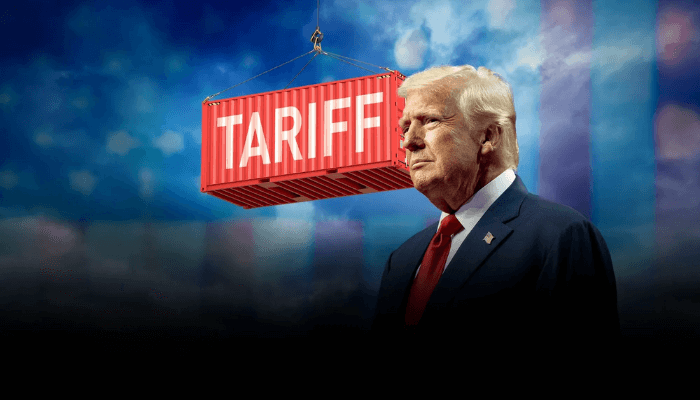
The much-feared trade war ensured between the two biggest economies in the world. The global trade scene was heated and uncertainty reigned. The US and China went into trade deal negotiation. An agreement was reached to scale the tariffs to 30% for 90days. Just as the situation was abating, on 9th October, 2025, China imposed a restriction on the export of rare earth metals. It also banned its nationals and Chinese companies from assisting in the processing of rare earth metals overseas. This pronouncement revived the tensions and aggravated the trade war. China controls about 70% of rare earth metals in the world. China also controls about 90% of the global refining, processing, separation of rare earth metals and magnet manufacturing. In retaliation, President Trump imposed a 100% tariff on imports from China. The US imports about 70% of its rare earth metal inputs from China. At the centre of the tensions are also the export of semi-conductor chips from US, lack of patronage of US soyabeans and agricultural goods by China and the restriction of rare earth metals by China. The two great economic powers have entered into another round of trade negotiation. The objectives of imposition of the tariffs are to generate revenue in order to reduce trade deficits, protect local industries from unfair competition, serve as bargaining chips for trade negotiations, correct perceived unfair trade practices and enhance government revenue. It is expected that this policy will re-orientate the trade policy of US and ensure that companies relocate their manufacturing into US to create more jobs and enhance revenue. This policy has reset the Free world order and global trade policy as enunciated in World Trade Organization’s policies. The policy has the great potential of deepening global trade war and eroding trade norms. Tariffs are instruments of trade. America has about $773.4Billion trade deficits. This is because other countries charge higher tariffs on American goods than America does on theirs. It is important to note that many manufacturing companies relocated to Asia, Europe and South America due to high cost of labour and stringent regulations and anti-trust requirements in US. Asian countries such as China, Japan, South Korea, Taiwan, Hong Kong, Singapore became the manufacturing hub of the world. America with its population of citizens with high per capita income and high disposable income powered by credible credit system remains the biggest market and consumption destination of Asian goods. China is the biggest beneficiary of America’s liberal tariff policy. To take full advantage of America’s liberal trade policy, China re-routed its manufacturing and exports to the US through its ASEAN neighbours such as Cambodia, Laos, Vietnam, Myanmar, Thailand, Indonesia. This is the reason for the high reciprocal tariffs on these countries. China exports through Lesotho, Egypt, and Ethiopia in order to take advantage of AGOA, it exports through Mexico to take advantage of NAFTA, it exports through Bangladesh and the ASEAN in order to conceal its trade deficit with US to avoid its backlash.
Judging from the experience and fallout of the Tariffs Act of 1930 popularly known as Smoot-Hawley Tariffs Act of 1930 which is said to have greatly deepened the great depression of 1929 and prevented the anticipated quick economic recovery, tariffs are a gamble. This tariffs act was enacted and signed into law by President Herbert Hoover on June 17, 1930. That act raised tariffs on over 20,000 imported goods in America. The act was enacted to protect American industries from foreign competition during the ravage of the great depression which started in October 1929. Many American policy analysts and economists advised against the bill but the congress went ahead to pass it.
Rather than increasing manufacturing and domestic employment, it worsened and deepened the depression when US’s trading partners retaliated by imposing counter tariff which made US exports and global trades to reduce. This was a caution against protectionist policy. They can be useful in the short-run but in the long-run, they work against the imposer. The Economist Magazine described the Smoot-Hawley Act of 1930 as ‘’the tragic-comic finale to one of the amazing chapters in world transaction history’’.
This policy was subsequently followed by more liberal trade policy like the Reciprocal Trade Agreements Act, 1934.On 25th April, 1987, President Ronald Reagan in his speech expatiated on the short-term merits and long- term grave demerits of high tariffs and protectionist economy.
Many of the traditional allies of US are hurt with the tariffs. With the new tariff regime and the expiration of the Africa Growth Opportunities Act (AGOA) on 30th September, 2025, the African countries are doubly wiped in their trade relations with the US. AGOA was signed into law by President Bill Clinton on 1st May, 2000 as part of Trade and Development Act 2000. AGOA has been renewed severally in 2004, 2008 and 2015 with each renewal extending its duration and scope. The Act was enacted to grant eligible African countries duty-free access to US market for over 6000 products including agricultural goods, textile and manufactured items. Although African countries did not take full advantage of AGOA due to other challenges such as broader US trade requirements, policy environment in African countries and limitations to eligibility, renewing it is very critical for the sustenance of African economies and the US-Africa relations. Not doing so, can undermine their trade stability and investment confidence across Africa. The present tariff regime by US on African economies will adversely affect their fragile economies.This scenario with AGOA is unlike the Chinese who took full advantage of the United States-China Act of 2000 which was signed into law by President Bill Clinton at the same year AGOA was signed. That Act allowed China to join World Trade Organization in 2001 and granted China Permanent Normal Trade Relations (PNTR). China used the opportunities offered by that Act to penetrate the US and Western markets tapping into US technology transfer, Education, intellectual property and innovation. The greater part of the prosperity and high profile of China today is derived from the opportunities offered by that Act. Many American intellectuals and business leaders blame America for the rise and challenge from China.
The imposition of the tariffs has shaken the bilateral trade relations between the US and her strong allies such as European Union, Canada, Uk, India, Japan, South Korea, Taiwan. Although negotiations are ongoing to reach agreement, the truth is that the tariffs have created cracks in the walls of these relationships.
Europe, Canada and other allies are exercising restraint in retaliation remembering the umbilical cord of NATO and the robust mutual relations since World War 11. The tariffs created panic in the world. Europe, the traditional allies of America were agitated. South Korea and Taiwan were terrified. Japan was edgy. Germany, though part of Europe was deeply concerned. The constant threats and talks about tariffs engendered fears and over time confidence in the global economy waned. Perception became reality. There was a lot of palpable fear and anxiety. Uncertainty and gloom loomed over world economy. Even now, the outlooks are not so positive. The US holds the axe. However, the reality is that the market is optimistic that the worst of the tariffs is over. Due to the flexibility of the supply chains, the tariffs did not engender as much feared economic dislocations except for price hikes and inflationary waves.
About 40 countries globally including Japan, South Korea, Taiwan, Germany depend on America for their military defence. America has defence treaties, trade deals, nuclear weapon treaties with many countries. These countries are now worried about the dependability of these treaties. In all these, Russia and China are waiting on the wings to fill the gap to be created in the new world order by the US. They and their allies in BRICS are braving up for a show down. However, it is not Uhuru yet.
The America allies feel that the philosophy of America First, will relegate them to a second fiddle in the scheme of American foreign policy. Europe, Japan and other Asian countries have started shoring up their defence budgets and economic policies to cater for the possibility that their traditional big ally reneges on their bilateral and multilateral agreements.
The Trump administration is pushing to stop the Russia-Ukraine war. A proposal for Ukraine to use its rare earth and mineral-oil and gas etc to pay for US military support and past aids to Ukraine has been signed. Indeed, President Trump is proposing to sign rare earth and minerals deals around the world to beef US feedstock. The Ukrainian deal is the first to kickstart the series. The first phase Israel-Palestine/Hamas war cease-fire has been successfully executed. The credit goes to President Trump.US has indicated its intention to leave the World Health Organization. The US has exited the human rights council which protects the global consensus on global human rights, peace, international law, justice and norms. The US has just announced that “it rejects and denounces” the United Nations Sustainable Development Goals (SDG). This is a deadly blow to global development goals. The scrapping of USAID is another blow to the allies especially Sub-Saharan African countries, Asia and South America. USAID was symbolically the soft power arm of US. These are decisions and policies which the US need to reconsider and reverse for the interest of the world order they have built since World War 11.
On the signals for territory aggression, there is the insinuation that President Trump administration wants to annex its closest neighbor and ally, Canada to be the 51st State of US. Even President Trump has once addressed the former Canadian Prime Minister as Governor Trudeau. The Trump administration has also indicated intention to take over the Islands of Greenland and Panama. If this is pursued, this may serve as an impetus for potential territorial aggressors like Russia to jump on the wings and annex its East European neighbors like Estonia, Latvia, Lithuania, Armenia, Bosnia, Georgia, Herzegovina, Moldovia, Serbia etc. And of course, China will fulfill her age-long ambition of annexing Taiwan. South Korea will be threatened by this. This will unleash global territorial aggression contrary to the tenets of the World order since 1945.
About 40 countries globally including Japan, South Korea, Taiwan, Germany depend on America for their military defence. America has defence treaties, trade deals, nuclear weapon treaties with many countries. These countries are now worried about the dependability of these treaties. In all these, Russia and China are waiting on the wings to fill the gap to be created in the new world order by the US. They and their allies in BRICS are braving up for a show down. However, it is not Uhuru yet.
The America allies feel that the philosophy of America First, will relegate them to a second fiddle in the scheme of American foreign policy. Europe, Japan and other Asian countries have started shoring up their defence budgets and economic policies to cater for the possibility that their traditional big ally reneges on their bilateral and multilateral agreements.
My view is that America’s well-crafted free world order of free trade, liberal democracy, free travel, fundamental human rights and liberal capitalist economy since 1945 is well entrenched in its democratic values, ideals and foreign policies that it is very difficult to radically uproot it. President Trump despite public perception is very mindful of the strategic position of US and America’s responsibility for the peace, stability, law and order as well as the economic well-being of the world. He will ultimately soften on his stance on imposition of tariffs especially to their neighbours and traditional allies in order not to overheat the world especially where America’s global leadership will be threatened. He is a businessman in and out of government. He is structuring deals for the enhancement of America’s prosperity. As a businessman, his entire life is about deals. Deals are struck on haggling, negotiations, concessions, dialogues and agreements. You raise the stakes based on your perceived strengths and competitive advantage over your counterparty. At the end, a deal is struck which is mutually beneficial to both parties. His overall ambition is to solidify and increase the economic prosperity and re-assert the dominance of America in the new world order. His approach or method may be different from our expectations. The world should not walk itself into a frenzy of fears and panic.
The world remains enchanted by America’s exceptionalism, its economic growth, its stable governance institutions, its consistent refined democratic ideals and its track of leadership that has produced the most proficient, patriotic visionary leaders in the world. America is the world’s most generous country. To borrow the title of Michael Beckley’s book, America is unrivaled. It should not abandon the world. China and Russia cannot replace America. These two countries, China and Russia , are more concerned about their self -preservation, draconian, too self-centered to care about the rest of the world.
Dr Allwell Umunnaehila is a Chartered Stockbroker, a commodities broker, a Financial, Economic and Management Consultant who holds a Ph.D in Business Administration from Babcock University,Nigeria. He is the CEO, AllwellBrown Consulting Ltd, an author, a seasoned scholar and Investment trainer. He is also a Fellow of Chartered Institute of Stockbrokers (CIS), Member, Chartered Institute of Securities and Investment (CISI), Member, Capital Market Academics (CMA) and a licensed Securities Dealer with Securities and Exchange Commission.